
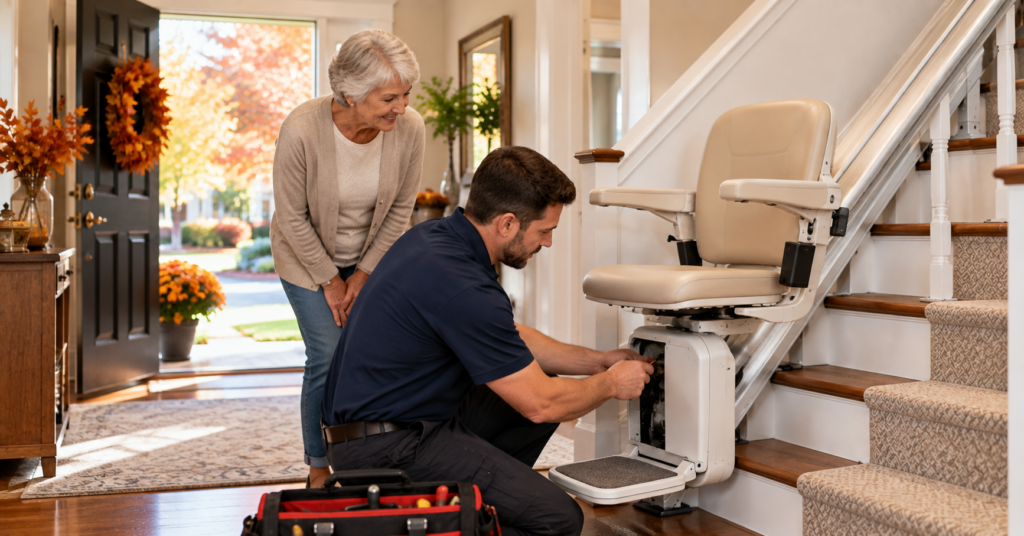
Fall is the best time to schedule stairlift service because it gives a technician time to replace weak batteries, test safety features, and fix small problems before winter storms, power outages, and holiday schedules make repairs harder to get. A tune-up in October or November means your lift is ready for the months when it matters most.
Winter changes how a household uses its stairs. Icy driveways keep seniors indoors more often, so the stairlift runs more trips each day. A nor’easter can knock out power for two days. A technician who could come next week in October might be booked three weeks out in January. This guide explains why fall timing matters, what a service visit covers, the specific risks winter brings, and simple steps you can take at home.
Why Fall Timing Matters Before Winter
Scheduling in fall puts you ahead of three predictable pressures: weather, demand, and the holidays. Weather comes first. Snow and ice make it harder for technicians to reach homes quickly, and a single storm can create a backlog of emergency calls. Getting service done while roads are clear avoids that wait.
Demand climbs as temperatures drop. Cold weather is hard on batteries, so more lifts start beeping, slowing down, or failing in December and January. Service calls pile up at exactly the moment you can least afford a broken lift.
The holidays add one more layer. Many families host relatives between Thanksgiving and New Year’s, and an elderly guest may rely on the stairlift to reach a bedroom. A lift that stalls on Christmas Eve is far harder to fix than one serviced in early November. Parts can take time, too. If your technician finds a worn gear or failing control board, a fall visit leaves room to order and install the part before winter sets in.
What a Fall Stairlift Service Visit Includes
A professional service visit usually takes about an hour and covers every system that keeps the rider safe. A typical fall tune-up includes:
- Battery testing. The technician measures how well the batteries hold a charge and replaces them if they’re fading. Most stairlift batteries need replacing every few years.
- Charging point check. Contacts at the top and bottom of the rail are cleaned and tested so the lift charges every time it’s parked.
- Rail inspection. The rail is cleaned and checked for loose brackets, debris, or wear along the track.
- Motor and gearbox test. The lift is run under load to listen for grinding, clicking, or strain.
- Safety feature check. Seatbelts, swivel locks, obstruction sensors, and the key switch are each tested.
- Remote and control test. Call remotes and armrest controls are checked, and remote batteries are replaced.
Ask for a written service report. It gives you a record for warranty purposes and a clear list of anything that may need attention later.
Winter Risks: Power Outages, Cold Batteries, and Outdoor Lifts
Winter tests a stairlift in ways summer never does. Knowing the risks helps you see why a fall checkup pays off.
Power outages. Most modern stairlifts run on batteries that keep working when the power goes out. That backup only helps if the batteries are healthy. A fading battery that manages a full day of trips in October may give out after just a few during a multi-day outage in February.
Cold temperatures. Batteries lose capacity in the cold. A lift in an unheated basement stairwell, or near a drafty front door, may slow down or struggle on frigid mornings.
Outdoor stairlifts. Lifts on porch or deck stairs face snow, ice, and road salt tracked onto the steps. A technician can check weatherproof covers, seals, and the rail for corrosion. Ask about a fitted cover if your lift doesn’t have one.
Heavier daily use. When it’s too icy to go out, seniors spend more time indoors and use the lift more often, putting extra wear on every component.
Homeowner Prep Checklist Before the First Storm
A professional visit covers the technical work, but a few simple habits at home keep your lift winter-ready.
- Always park at a charging point. Leaving the chair mid-rail drains the batteries, which matters most when an outage hits.
- Stock spare remote batteries. Keep a pack of the right size near the stairs.
- Post the service number. Tape your provider’s phone number inside a kitchen cabinet or save it in every family member’s phone.
- Keep the stairs clear. Holiday decorations, boot trays, and gift bags near the rail can trigger safety sensors.
- Plan for long outages. Know how many trips your lift can make on battery power, and keep essentials on the floor where the rider sleeps.
- Shovel and salt carefully. For outdoor lifts, clear snow from the steps and avoid piling salt directly on the rail.
If the lift starts beeping, slowing, or making new noises, call right away rather than waiting for a full breakdown.
Schedule Your Fall Stairlift Tune-Up Today
The weeks before the first snowfall are the easiest time to keep your stairlift reliable all winter. A fall service visit catches weak batteries, worn parts, and safety issues while appointments are still open and roads are still clear.
Book a tune-up with a certified stairlift technician now. They’ll test every system, replace what’s worn, and give you a written report so you know your lift is ready for storms, outages, and holiday guests. Ask about annual maintenance plans that lock in a fall visit every year. Call today or schedule your fall stairlift service online. Get your lift winter-ready before the snow hits.