Veterans can get stairlifts, wheelchair ramps, power wheelchairs, roll-in showers, and vehicle lifts, often with much of the cost covered by VA grants and benefits. The key is knowing which program pays for which upgrade and starting the paperwork before the equipment is needed in a hurry.
The need is real and varied. A Vietnam veteran with peripheral neuropathy may struggle with the 14 stairs to his bedroom. A younger Iraq veteran using a prosthetic leg may need a step-free entrance and a roll-in shower. A Korean War veteran in his nineties may simply want to keep living in the house he bought after coming home. This guide covers home upgrades, personal and vehicle equipment, the VA programs that fund them, and the steps to get started.
Home Accessibility Upgrades for Veterans
The right home upgrades let veterans live independently and safely in their own houses. Most projects fall into a few categories, and many can be completed in a day or two.
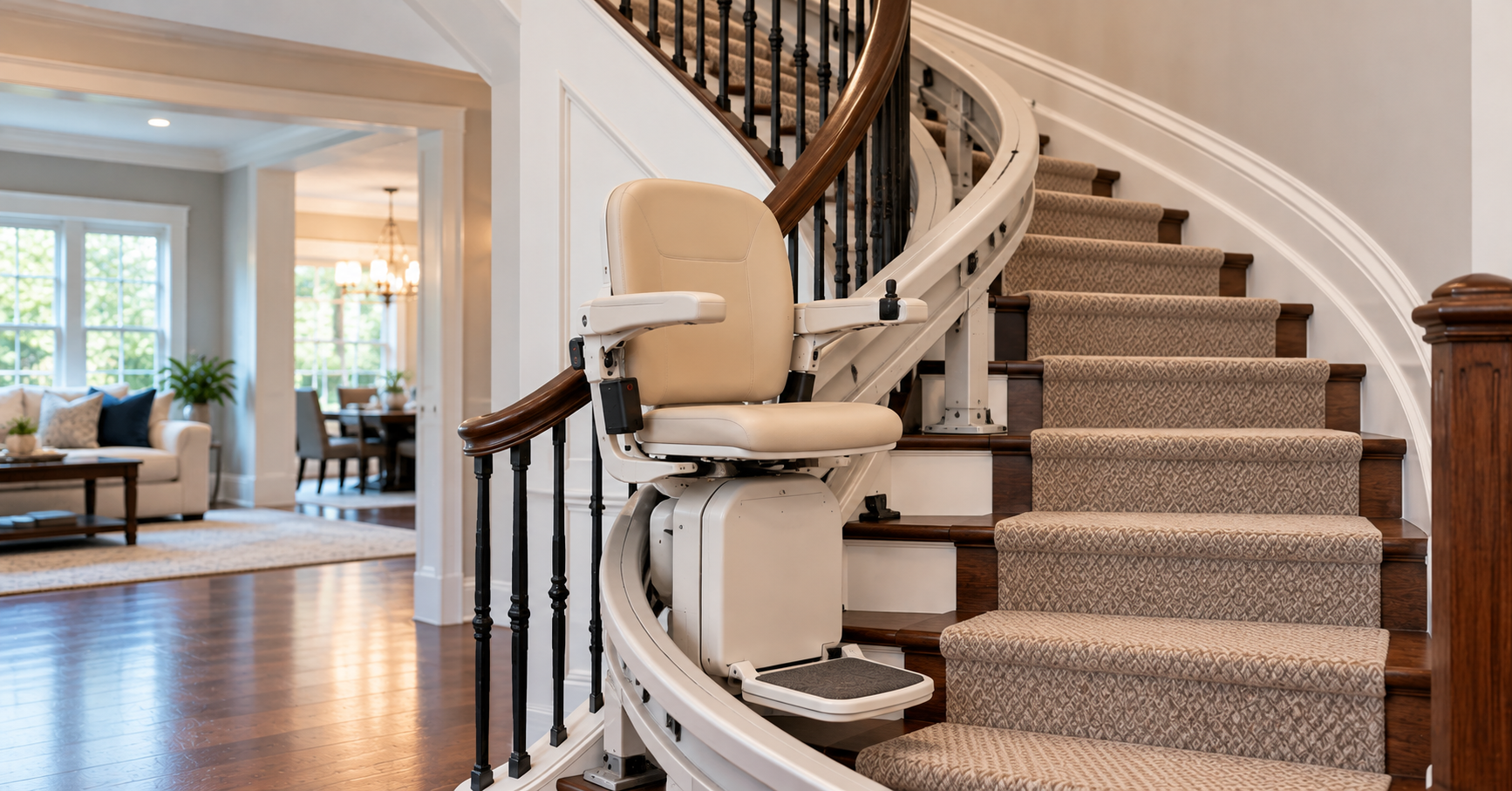
- Stairlifts carry a rider between floors on a rail mounted to the stair treads. Straight units can often be installed the same day.
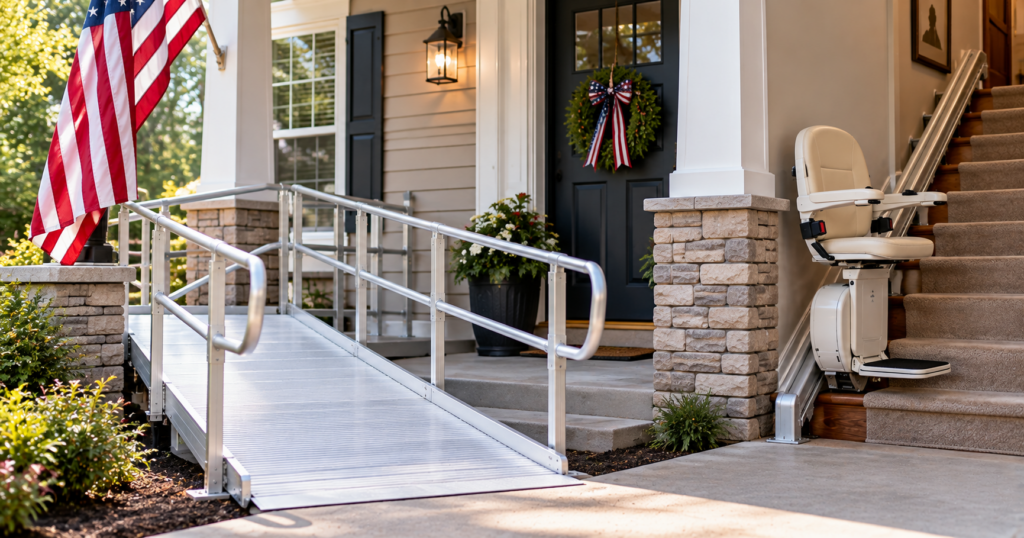
- Wheelchair ramps replace front steps with a gentle slope. Modular aluminum ramps work for changing needs, while concrete suits permanent access.
- Roll-in showers remove the tub wall entirely, so a veteran using a wheelchair or shower chair can roll straight in.
- Grab bars and handrails cost little and prevent falls by the toilet, in the shower, and along hallways.
- Vertical platform lifts and home elevators work where a ramp would be too long, such as a raised ranch with a high front entry.
One practical example: a veteran recovering from a knee replacement might need a stairlift and a shower chair for six months. A veteran with a spinal cord injury will need a whole-home plan, including wider doorways and a lowered kitchen counter.
Personal and Vehicle Mobility Equipment
Mobility doesn’t stop at the front door. Veterans who want to get to appointments, Legion meetings, or a grandchild’s ball game need equipment that travels with them. Power wheelchairs and mobility scooters cover longer distances than a manual chair. A lightweight folding scooter fits in a sedan trunk, while a heavy-duty power chair handles gravel driveways and uneven sidewalks. Rollators with a built-in seat help veterans who can walk short distances but need to rest.
Vehicle solutions close the gap. A hitch-mounted carrier or a trunk lift loads a scooter without anyone lifting it. Wheelchair-accessible vans with a side ramp let a veteran roll in and drive or ride from the chair. Hand controls allow a veteran with limited leg function to brake and accelerate safely. The VA’s prosthetics service provides many of these devices directly to eligible veterans, often at no cost.
VA Grants and Benefits for Mobility Equipment
Several VA programs pay for mobility upgrades, and each covers a different kind of need. Grant amounts are adjusted periodically, so confirm current figures with the VA before planning a budget.
- Home Improvements and Structural Alterations (HISA) grant. Helps pay for medically necessary changes such as ramps, grab bars, roll-in showers, and widened doorways. It’s available for both service-connected and non-service-connected conditions, with a higher limit for service-connected veterans.
- Specially Adapted Housing (SAH) grant. Supports larger projects, including building or remodeling a home, for veterans with qualifying severe service-connected disabilities such as loss of use of the legs.
- Special Housing Adaptation (SHA) grant. Covers adaptations for veterans with certain other service-connected conditions, including some vision and hand impairments.
- Automobile allowance and adaptive equipment. Helps eligible veterans buy a vehicle and add lifts, ramps, or hand controls.
- VA prosthetics benefits. Provide wheelchairs, scooters, and many home-use devices for enrolled veterans.
State programs and Medicaid waivers may fill gaps the VA doesn’t cover.
How Veterans Can Get Started
The process moves faster when you follow it in order. Here’s the path most veterans take from first call to finished installation.
- Enroll in VA health care if you haven’t already. Most mobility benefits require it.
- Talk to your VA provider. A prescription or documented medical need is the foundation of most grant applications.
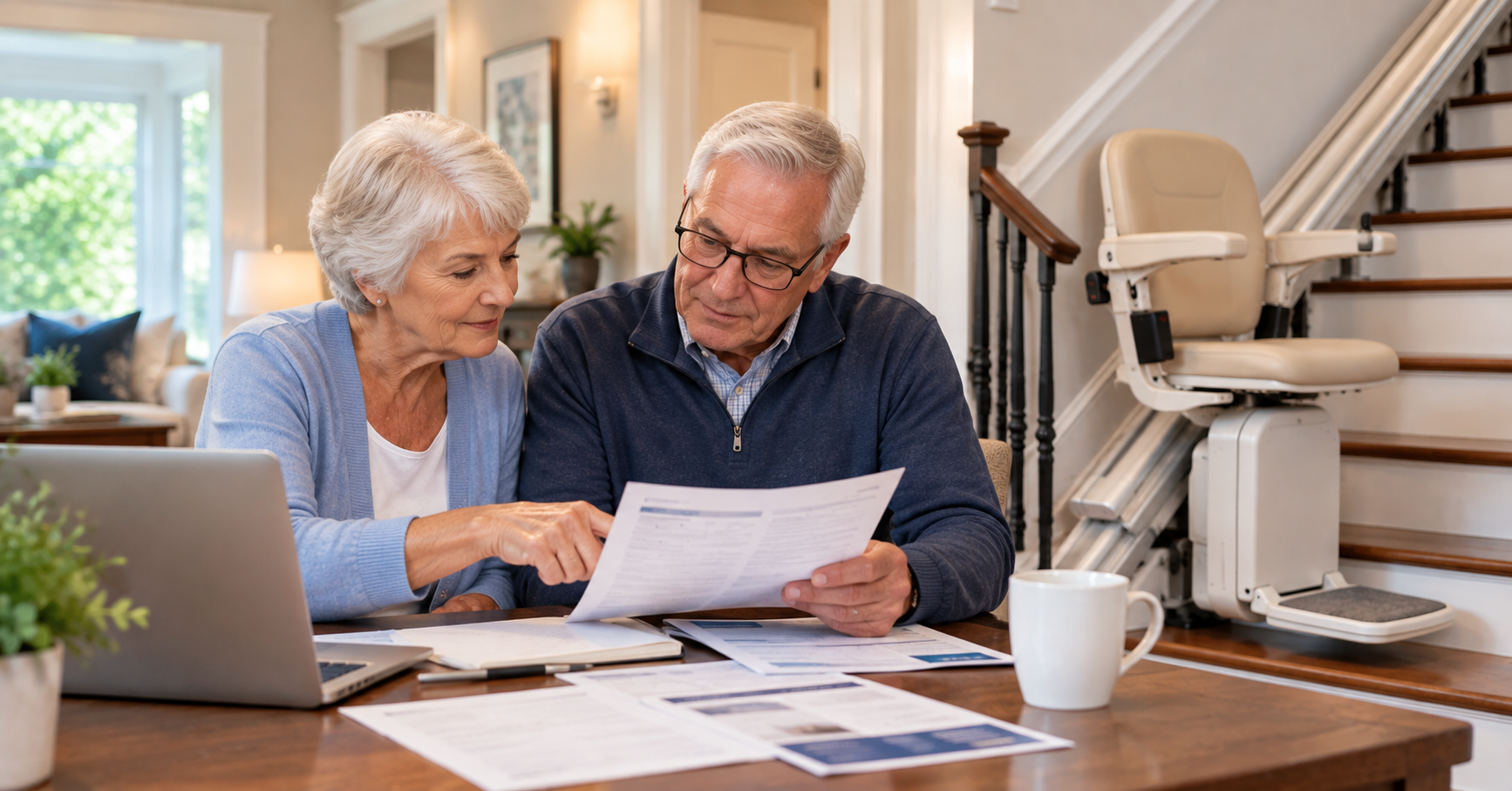
- Get help from a Veterans Service Officer. Accredited representatives from groups like the DAV, VFW, and American Legion help with forms at no charge.
- Schedule a home assessment. A mobility specialist measures stairs, doorways, and entries and recommends the right equipment.
- Get a written quote. The VA typically needs an itemized estimate before approving funds.
- Install and train. Once approved, the installer completes the work and shows the veteran and family how to use everything safely.
Keep copies of every document. Approvals sometimes stall when a single form goes missing.
Honor Your Service With Safe, Independent Mobility
Veterans gave years of service to this country. Getting up the stairs, into the shower, or out to the car should never be a daily struggle.
Start with a free in-home mobility assessment. A specialist will evaluate your home, recommend stairlifts, ramps, or bathroom upgrades that fit your needs, and provide the itemized quote the VA requires for grant approval. Many providers have walked veterans and their families through HISA and SAH paperwork many times. Call today or request your free veteran mobility consultation online. Thank you for your service, and let us help you stay safely at home.