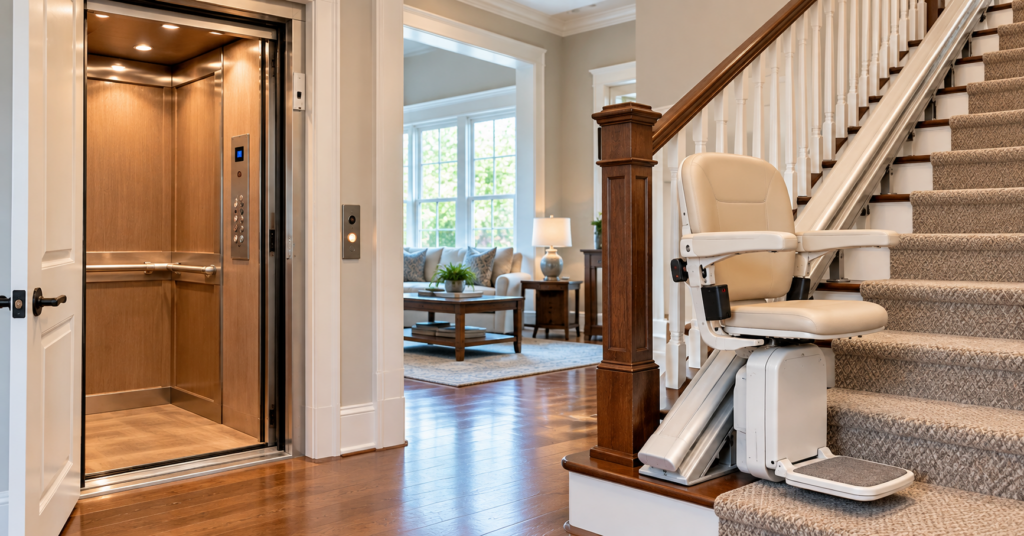
A stairlift is the faster, more affordable choice for someone who can sit, transfer, and needs help with one straight staircase. A residential elevator is the better long-term investment for full-time wheelchair users, multi-story homes, or families who want every floor accessible to everyone.
Both solve the same problem: getting safely between floors. They do it in very different ways, at very different price points, and with very different effects on your home. A stairlift can be running by dinnertime. An elevator is a construction project measured in weeks or months. This guide compares how each works, which users and homes suit each option, and what to expect for cost, installation, and value.
How Stairlifts and Residential Elevators Work
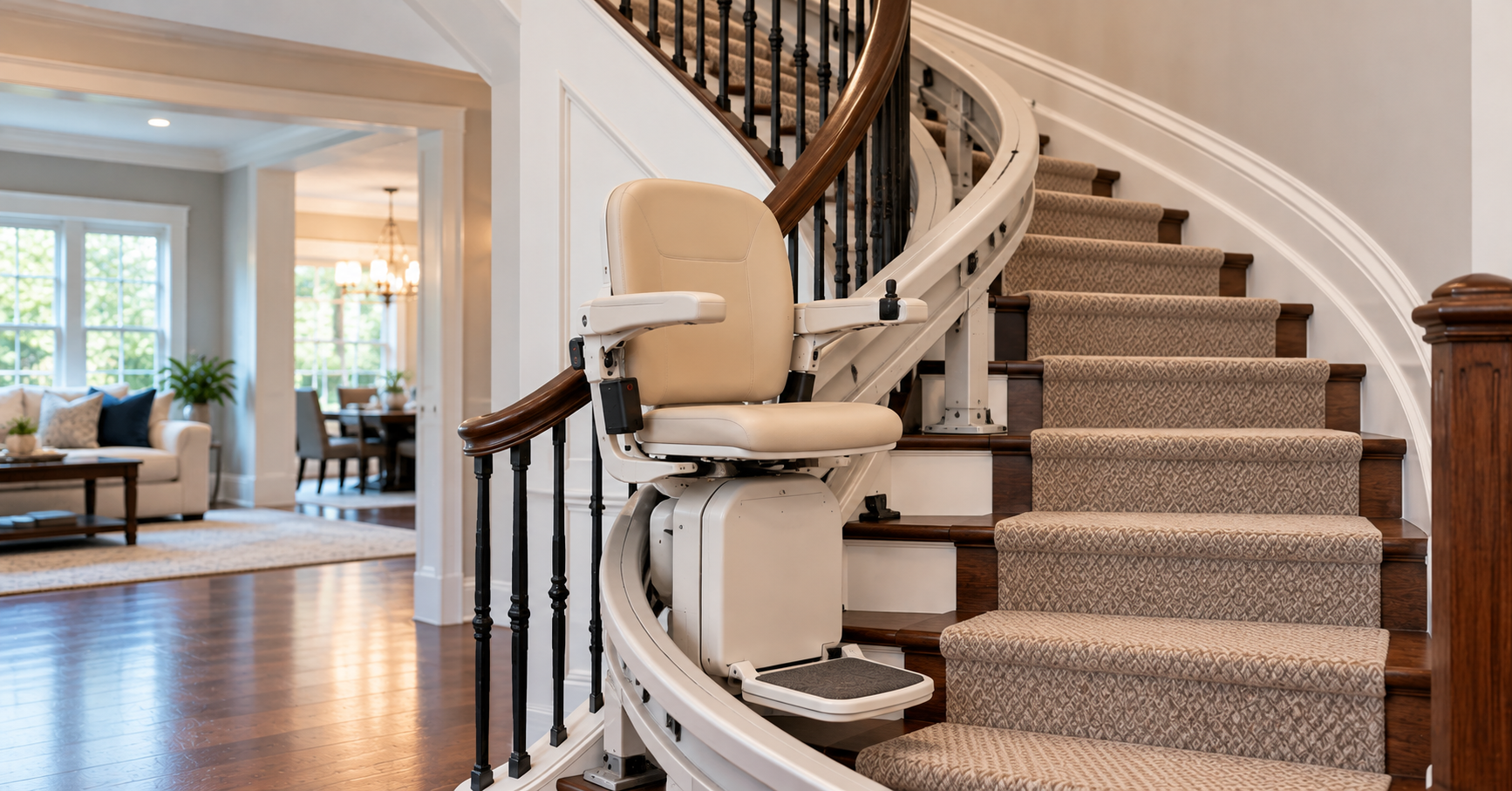
A stairlift is a motorized chair that travels along a rail mounted to your stair treads. The rider sits, buckles in, and presses a control on the armrest. Straight models install in hours, while curved models use a custom rail built to follow turns and landings. A residential elevator is a small, enclosed car that moves vertically between floors. Several designs are common:
- Hydraulic elevators use a pump and fluid to lift the car. They’re smooth and reliable but usually need a separate machine room or closet.
- Traction or cable-driven elevators use counterweights and a motor, often without a machine room, saving space.
- Pneumatic vacuum elevators move a clear, tube-shaped car using air pressure. They need no pit or shaft construction in many cases, and their glass design fits modern interiors.
- Through-floor or shaftless lifts travel through a hole cut in the ceiling between two floors. They’re compact and less expensive, but typically serve only two levels.
Elevator projects must meet safety codes such as ASME A17.1, which is why licensed installers and permits are required.
Matching the Choice to the User’s Mobility Needs
The rider’s abilities matter more than any other factor. Start there before thinking about budget or design.
A stairlift works well for someone who can walk short distances and transfer in and out of a seat. A retiree with arthritic knees, a person recovering from hip surgery, or someone with COPD who gets winded on stairs are all classic stairlift users. An elevator becomes the better choice when:
- The user is in a wheelchair full-time. A stairlift requires transferring to the seat and keeping a second wheelchair upstairs. Many elevator cars fit a wheelchair and a caregiver together.
- Mobility is expected to decline. A person diagnosed with ALS or advanced Parkinson’s may soon be unable to transfer safely, making an elevator the more future-proof option.
- More than one person needs help. A couple who both struggle with stairs can ride together.
- Daily loads are heavy. Laundry baskets, groceries, and luggage ride along easily in an elevator car.
Fitting the Option to Your Home’s Style and Space
Your floor plan often makes the decision for you. Stairlifts use the staircase you already have, while elevators need dedicated space on every floor they serve.
Two-story colonials with a straight staircase are ideal for stairlifts. The rail hugs the stairs, the chair folds up when not in use, and family members can still use the steps.
Victorians and older homes with curved or narrow stairs may need a custom curved stairlift. If the staircase is very tight, an elevator placed elsewhere in the house can be the cleaner solution.
Three- and four-story townhouses often favor elevators. Running stairlifts on every flight gets expensive, and each transfer adds risk. Many owners place an elevator in vertically stacked closets, one above the other.
Modern or open-concept homes can showcase a glass pneumatic elevator as a design feature rather than hiding it.
Ranch homes with a basement may only need a stairlift for occasional trips downstairs.
Cost, Installation Time, and Long-Term Value
Stairlifts cost a fraction of what elevators do. A straight stairlift typically runs a few thousand dollars installed, and curved models cost more. Residential elevators commonly start in the tens of thousands of dollars, and total project cost rises with the number of floors, the elevator type, and the construction needed to build a shaft.
The timelines differ just as sharply. A straight stairlift can often be installed in a single day, and pre-owned or rental units cut costs further. An elevator project usually involves design, permits, framing or shaft work, electrical upgrades, installation, and a final inspection. Expect several weeks to a few months from first consultation to first ride.
Long-term value cuts both ways. Stairlifts are easy to remove and can often be sold back to a dealer. Elevators stay with the house and may appeal to future buyers planning to age in place. Both typically need annual maintenance, and elevators often require periodic safety inspections.
Find the Right Fit for Your Home With a Free Consultation
The right choice between a stairlift and a residential elevator depends on who will use it, how their needs may change, and how your home is built. Getting that decision right the first time saves money, time, and stress.
Start with a free in-home consultation. A home accessibility specialist will evaluate your staircase, your floor plan, and the rider’s mobility needs, then recommend the solution that fits best, whether that’s a same-day stairlift or a custom elevator designed for every floor. You’ll receive a clear, itemized quote with no pressure. Call today or schedule your free home mobility consultation online. Every floor of your home should be easy to reach.