Your stairlift likely needs repair if it makes new grinding or clicking noises, moves jerkily, stops partway up the stairs, beeps or shows an error code, or no longer holds a charge. Catching these signs early usually means a quicker, cheaper fix and keeps the rider from getting stuck mid-staircase.
A stairlift often runs several times a day, every day, for years. Small problems build quietly until one morning the chair won’t move and someone who can’t manage stairs is stranded on the second floor. This guide walks through the most common warning signs, the simple checks you can do yourself, and when it’s time to call a technician.
Movement and Noise Warning Signs
A healthy stairlift is quiet and smooth. Any change in how it sounds or moves is worth paying attention to.
- Grinding or scraping. This often points to debris on the rail, worn rollers, or a gearbox problem. A pet hair buildup or a dropped hairpin can cause it, but so can internal wear.
- Clicking or clunking. A repeated click as the carriage passes certain points on the rail may signal a loose bracket or a worn gear.
- Jerky starts and stops. If the chair lurches when it begins moving or brakes abruptly, the motor, soft-start controls, or batteries may be failing.
- Slower travel. A lift that takes noticeably longer to reach the top often has weak batteries or a motor under strain.
- Stopping mid-staircase. This is the most urgent sign. It may be triggered by a safety sensor, a power issue, or a mechanical fault.
Note when the problem happens. “It grinds only near the top landing” helps a technician diagnose the issue far faster than “it makes a noise.”
Battery and Power Warning Signs
Batteries are the most common source of stairlift trouble. Most modern lifts run on rechargeable batteries that wear out over time and typically need replacement every few years. Watch for these signs:
- Constant beeping. Many lifts beep when they aren’t charging. The chair may have been parked away from the charging point at the top or bottom of the rail.
- Error codes or flashing lights. A digital display or blinking LED usually signals a specific fault. Check your owner’s manual for what each code means.
- Fewer trips per charge. If the lift used to make many trips during a power outage and now manages only a couple, the batteries are fading.
- The lift won’t move at all. Before assuming the worst, check that the key switch is on and the power switch on the carriage hasn’t been bumped off.
A tripped circuit breaker or an unplugged charger causes more service calls than most people realize.
Safety Component Warning Signs
Safety features protect the rider every trip, so any fault here deserves prompt attention. Stop using the lift and call for service if a safety component isn’t working properly.
Seatbelt problems. A belt that won’t latch, retracts slowly, or shows fraying should be replaced right away.
A sticky swivel seat. The seat should rotate and lock firmly at the top landing so the rider can step off facing away from the stairs. If it swivels loosely or won’t lock, the rider is at risk of a fall.
Oversensitive or unresponsive sensors. Obstruction sensors on the footrest and carriage should stop the lift when they touch something. If the lift keeps stopping with nothing in the way, a sensor may be damaged. If it doesn’t stop when something is in the way, that’s even more serious.
Loose armrests or controls. A joystick that feels wobbly, or an armrest that shifts under pressure, can signal loose fittings or a worn mount.
Quick Checks Before You Call, and When to Call a Technician
A few simple checks solve many stairlift problems in minutes. Try these first:
- Confirm the key switch is on and the carriage power switch is set to the on position.
- Check the outlet and breaker. Plug a lamp into the outlet to make sure it has power.
- Park the chair at a charging point and listen for the beeping to stop.
- Replace the call-remote batteries if the remotes stop working but the armrest controls still do.
- Wipe the rail with a dry cloth to remove dust, pet hair, or small objects.
- Clear the footrest and check that nothing is pressing on a safety sensor.
Never open the motor housing, lubricate the rail with household products, or attempt electrical repairs yourself. Call a certified technician if the problem persists, if any safety feature fails, or if the lift stops mid-staircase more than once.
An annual professional service visit catches worn parts before they fail, and many warranties require it.
Schedule Your Stairlift Repair or Service Today
A stairlift that grinds, beeps, stalls, or loses its charge is asking for help. Addressing those warning signs early protects the rider’s safety and often turns a major repair into a minor one.
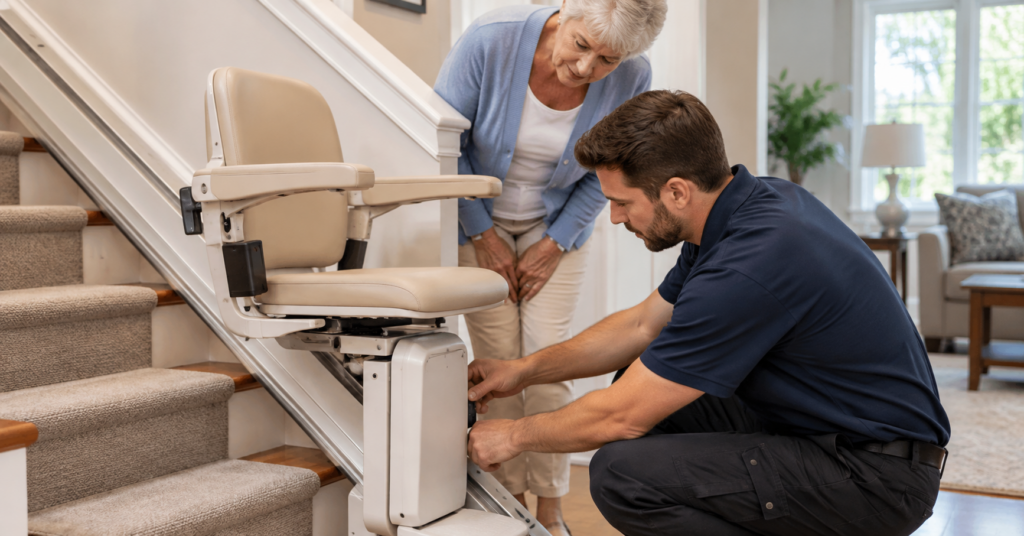
If your lift is showing any of the signs in this guide, schedule a service visit with a certified stairlift technician. They’ll diagnose the problem, replace worn batteries or parts, test every safety feature, and get your lift running smoothly again. Ask about annual maintenance plans to prevent future breakdowns. Call today or request a stairlift repair appointment online. Keep your stairlift, and the person who depends on it, moving safely.