When a stairlift stops working, make sure the rider is safe first, then check the simple causes: the power switch, the key, the safety sensors, and whether the chair is parked to charge. If those don’t solve it, call a certified stairlift repair technician and describe exactly what happened.
A stalled lift is stressful, especially when someone is sitting in it halfway up the stairs. Most stoppages turn out to have simple causes, such as a slipper pressing on the footrest sensor or a power switch bumped during cleaning. Some need a professional right away. This guide walks you through protecting the rider, troubleshooting safely, knowing when to call, and keeping everyone safe until the repair is done.
First Priority: Keeping the Rider Safe
The person matters more than the machine. Before you touch any switch, check on the rider.
If the rider is hurt, dizzy, short of breath, or showing signs of a medical emergency, call 911 right away. Tell the dispatcher someone is seated on a stairlift on a staircase, so responders arrive prepared.
If the rider is stuck but okay, keep them seated with the seatbelt fastened. Calm reassurance helps; stairlifts are built with brakes designed to hold the chair in place when it stops. Bring water, a phone, and a blanket if the wait might be long.
Avoid trying to lift or carry the rider off a stalled chair mid-staircase unless you are trained to do it and it’s clearly safe. Stairs are where falls happen, and a rushed transfer can injure both of you. If the rider can safely stand and walk the remaining steps with support, help them do so slowly, one step at a time, holding the handrail.
Quick Troubleshooting Steps to Try
Many stoppages clear up in under five minutes. Work through these checks in order, and stop if anything looks damaged.
- Check the key switch. Make sure the key is inserted and turned to the on position.
- Check the carriage power switch. Many lifts have a red or toggle switch on the side of the motor housing that’s easy to bump.
- Release the emergency stop. If your model has a stop button, make sure it hasn’t been pressed in.
- Look at the safety sensors. Clear anything touching the footrest or carriage, such as a dropped sock, a cane tip, or a pet toy.
- Read the display. If your lift shows an error code or flashing light, look it up in the owner’s manual or write it down for the technician.
- Check power to the charger. Make sure the charger is plugged in and the outlet works, and check the circuit breaker.
- Try the other controls. If the armrest joystick doesn’t respond, try a call remote, or vice versa.
Never remove the motor cover, force the chair along the rail by hand, or try electrical repairs yourself.
When to Call for Emergency Repair
Call a certified stairlift repair technician right away if the quick checks don’t work, or if any of these happen:
- The lift stops repeatedly mid-staircase with nothing blocking a sensor.
- You smell burning, see smoke, or hear a loud bang or grinding.
- The seatbelt, swivel lock, or footrest is broken or won’t latch.
- The chair moves unevenly, tilts, or makes contact with the rail in a new way.
- The rider depends on the lift to reach the only bedroom or bathroom.
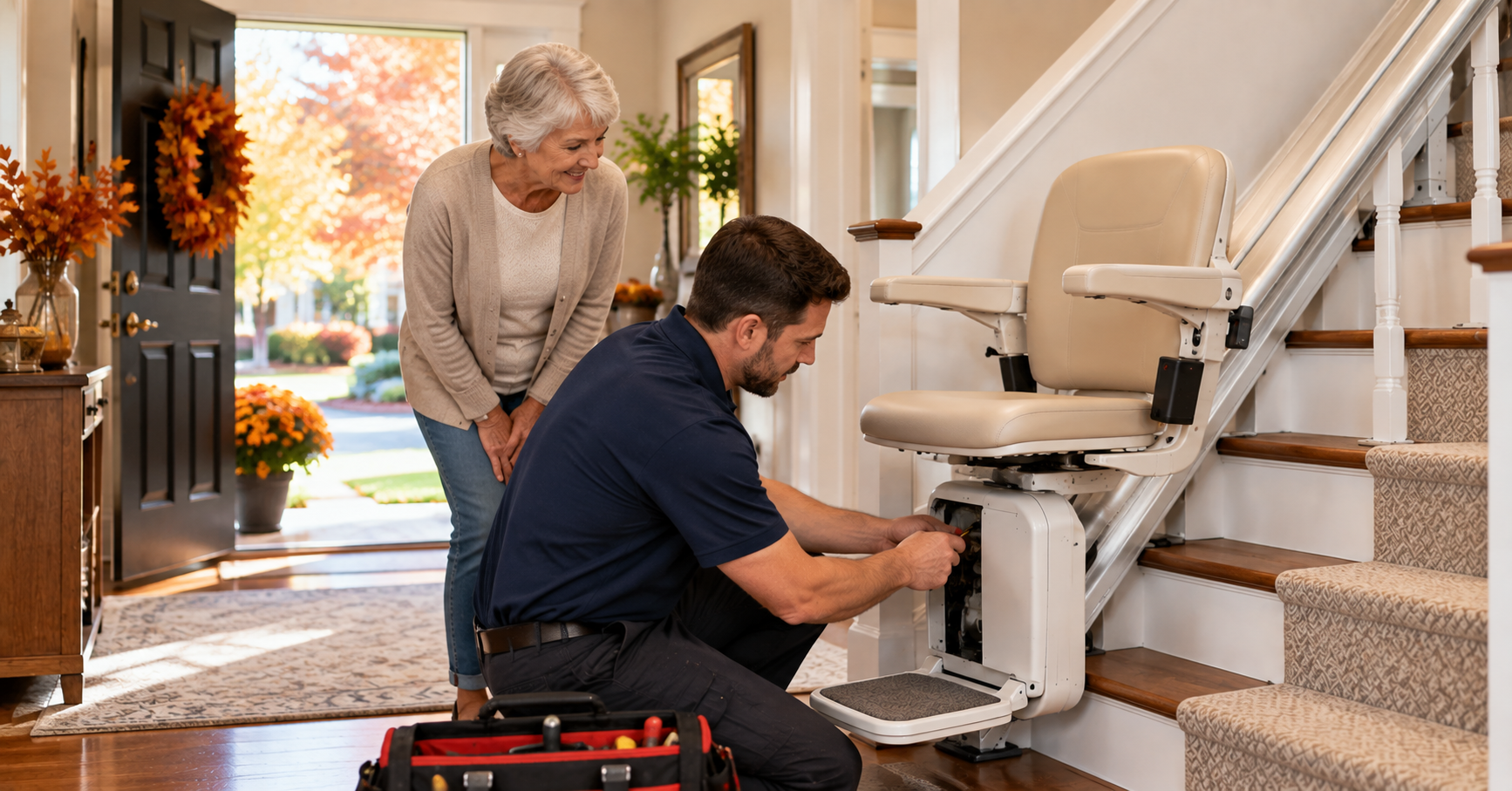
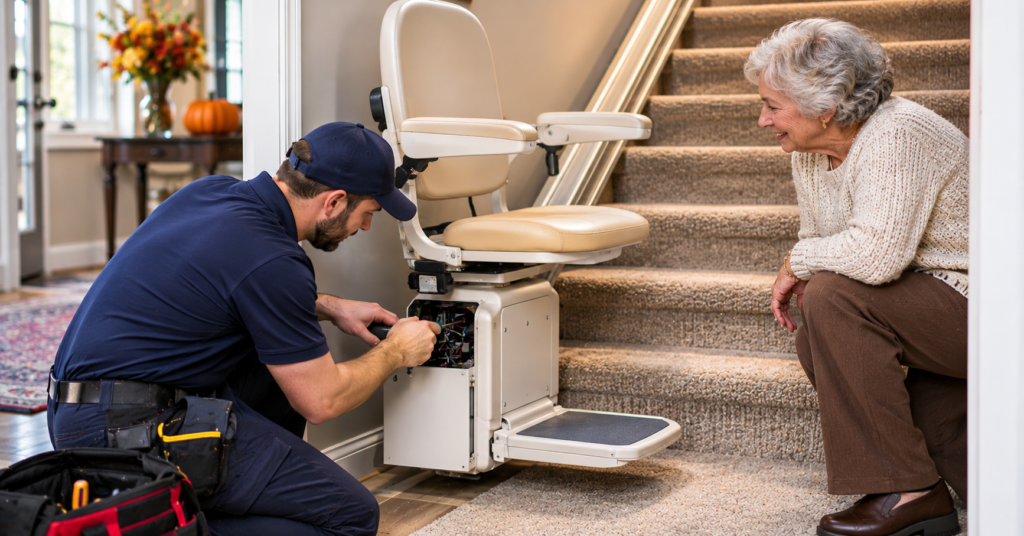
Many stairlift providers offer emergency or same-day service, sometimes after hours. Keep the provider’s number posted near the stairs and saved in family members’ phones. When you call, have this ready:
- The brand, model, and serial number, usually on a label under the seat or on the motor
- Any error code or flashing-light pattern
- Exactly where the chair stopped and what it was doing just before
- Whether the lift has been beeping, slowing, or making noise in recent days
The more specific you are, the more likely the technician arrives with the right part.
Staying Safe Until the Lift Is Fixed
A repair may take a few hours or a few days if a part has to be ordered. Plan for the gap so no one attempts the stairs alone.
Set up temporary living space on one floor. A recliner or a borrowed hospital bed in the living room, with a bedside commode if there’s no bathroom on that level, can carry someone through a day or two safely. Move medications, glasses, a phone charger, and a few days of clothing to that floor.
If the rider must use the stairs, have a second person present every time. Use the handrail, go one step at a time, and never carry items in both hands.
After the repair, take steps to prevent the next emergency. Schedule an annual service visit, always park the chair at its charging point, and replace the batteries when the technician recommends it. Call for service as soon as the lift starts beeping, slowing, or making new noises. Most emergencies give warning signs first.
Get Fast, Reliable Emergency Stairlift Repair
When a stairlift stops, the person who depends on it can lose access to their bedroom, bathroom, or front door in an instant. Quick, expert help gets them moving safely again.
If your lift has stopped working and the simple checks haven’t helped, contact a certified stairlift repair technician right away. They’ll diagnose the problem, carry common parts like batteries and sensors, and get your lift back in service as quickly as possible. Ask about maintenance plans that include priority emergency response. Call now for emergency stairlift repair, or request service online. Save the number today so it’s ready when you need it most.